
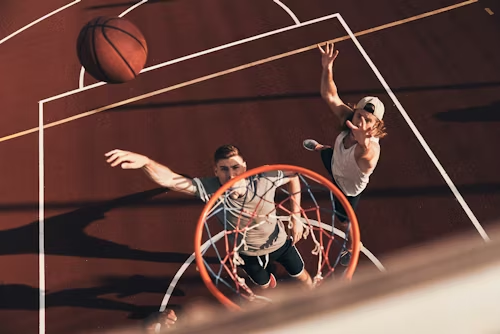
Ten feet. That’s the standard height of a basketball rim in professional, collegiate, and most competitive recreational play. For many players, ten feet feels impossibly high when they first start training to dunk. But understanding exactly what ten feet means in relation to your own body — and precisely how high you need your hand to clear that rim — is the foundation of any serious dunking training program. The more clearly you understand the target, the more effectively you can train to reach it.
The Standard Rim Height and Why It Was Chosen
The ten-foot rim height was established in the early days of basketball and has remained constant ever since. For accurate jump measurements, dunk calculator tool tools provide the exact figures you need. While this height was originally set somewhat arbitrarily, it has proven to be a nearly perfect competitive standard — high enough to require genuine athleticism but not so high as to make scoring impossible. For most adult males, the rim sits approximately 12 to 24 inches above their standing reach, making it a meaningful but achievable target with proper training.
The Difference Between Reaching and Dunking
Touching the rim and dunking the basketball are two very different physical feats. To merely touch the rim, your fingertips need to reach ten feet. To dunk, however, your hand needs to clear the rim with the ball in a controlled grip — typically requiring your wrist to reach approximately 10 feet 6 inches to 11 feet, depending on your hand size and the specific dunking technique you’re attempting. This 6 to 12 inch difference represents weeks or months of additional training.
Lower Rim Options for Skill Development
Training on adjustable rims — set to 8 or 9 feet — allows developing players to experience the mechanics and feel of dunking before they can reach the regulation ten-foot rim. This approach builds confidence, trains the correct movement patterns, and allows players to focus on the approach, takeoff, and finishing technique without being limited by raw vertical leap. Many elite programs use adjustable rims as a developmental tool.
How Standing Reach Changes the Equation
Two players of identical height can have dramatically different standing reaches depending on arm length and proportions. A player with a six-foot wingspan who stands 6’0″ tall may have a standing reach of 7’8″, while a player of the same height with shorter arms might have a standing reach of only 7’4″. This four-inch difference has a massive impact on how high they need to jump to dunk. This is why precise measurement matters so much in planning a dunk training program.
How Weather and Surface Affect Jump Height
Environmental factors can subtly affect your vertical leap performance. Cold weather reduces muscle elasticity, decreasing explosive output, while a slightly compliant surface like a good wooden gym floor can provide more energy return than a concrete court. Understanding these variables helps you interpret your vertical leap tests accurately and account for performance variations that aren’t related to your actual fitness level.
Setting Micro-Goals Between You and the Rim
Rather than focusing only on the final goal of dunking, set intermediate targets: first touch the backboard, then the net, then the rim, then palm the rim, then finally dunk. Each of these intermediate milestones requires 2 to 4 additional inches of vertical leap, making them achievable within realistic training timeframes. Celebrating each milestone keeps motivation high and demonstrates that consistent progress is happening even when the ultimate goal still feels distant.




Leave a Reply